
We make a lot of different hydrogels in the Lab. It’s an effective way to use your hydrosols for a range of actions—depending on the botanical combinations you use.
If you have not yet distilled hydrosol, our online Foundation Course ‘Distilling Hydrosol‘ will walk you through the process from start-to-finish. And our Encyclopedia Botanica has helpful information on an array of botanicals that will help you decide how to use what you have.
In general, hydrogels are useful for:
- Hydrating
- Cooling
- Toning
- Soothing
This particular hydrogel was created for one of our recent workshops to illustrate how we distil, explore and utilise some of our native New Zealand plants.
Our kawakawa and kanuka hydrogel is fresh, cool and silky—and very easy to make. We suggest you try this combo on insect bites, stings, mild rashes, minor burns, sunburn or itchy eyes (always patch test first). It may help repel insects, will cool a hot flush and hydrate your skin. As it dries it creates a smooth surface on the skin which can help smooth foundation and make it last longer.
Ingredients Percentage Volume (ml)
Kanuka hydrosol 40 400
Kawakawa hydrosol 40 400
Hoheria infusion 15.5 155
(optional)*
Xanthan clear 2 20
Kanuka EO
(optional) 1 10
Geogard 1.5 15
Total 100% 1000ml
*You can substitute aloe vera gel for the hoheria infusion, or you can leave out the hoheria altogether, just double the xanthan. Your gel will be slightly thicker than the original recipe, but just as delightful.
Xanthan clear produces a smoother, less stringy flow that regular xanthan gum. Both xanthan clear and Geogard are inexpensive and readily available online.
Before you begin
Get your materials together and sanitise your glassware and utensils.
We are working with water and botanicals which when in unison are quite unstable—other creatures enjoy them as much as we do—like our bacteria, fungi and yeast community. Its important that we have a clean, sanitised workspace and sanitise our equipment. We recommend using good quality labware, as they are accurate and easy to clean and sanitise.
The following sanitisation methods are all suitable for home use:
- Bake in oven at 135ºC for 10 min.
- Run through your dishwasher on a hot wash cycle.
- Spray with 80% ABV alcohol and let dry.
Method
- Measure out the hydrosol in a 1000ml cylinder (When measuring liquids, use calibrated cylinders for accuracy).
- Transfer the measured hydrosol into a 1000ml wide-mouth beaker (you need a larger surface area than the cylinder to hydrate the gum).
- Sprinkle the xanthan over the hydrosol and leave in the fridge overnight to hydrate.
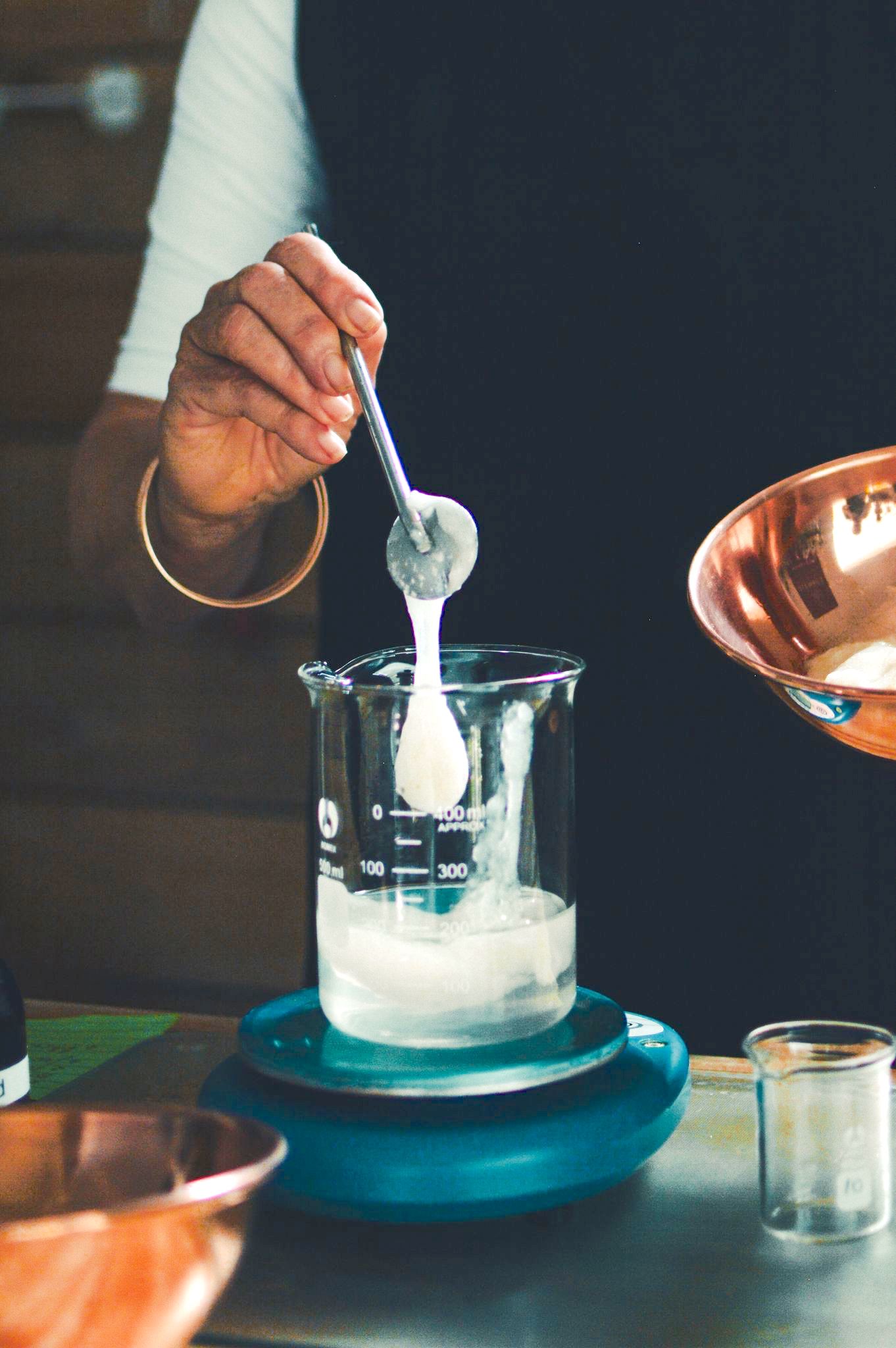
- The next day, gently whisk the rest of the ingredients in to disperse the xanthan and to evenly distribute all the ingredients throughout the mixture. Avoid over-mixing as you don’t want to aerate the gel.
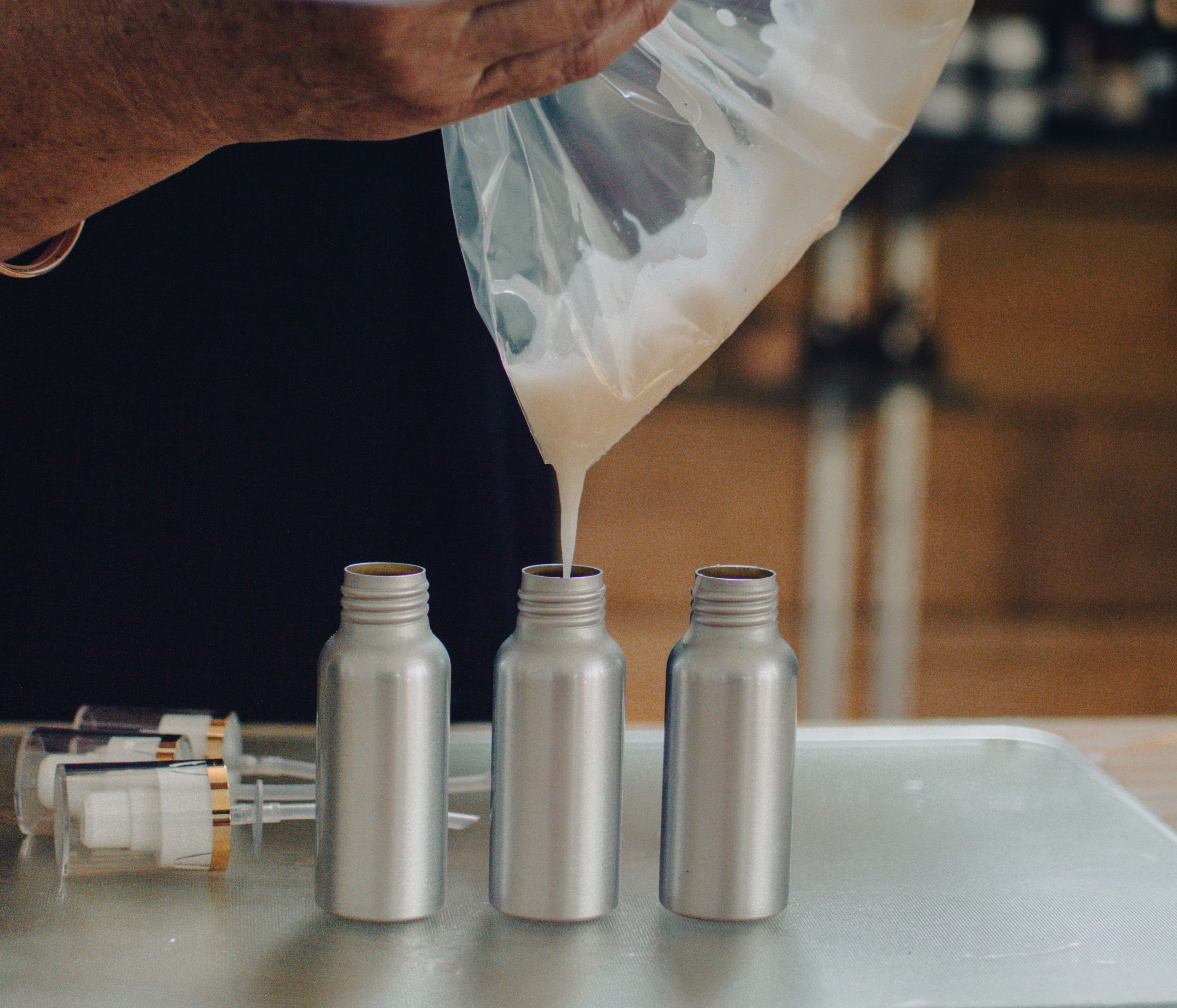
- Decant into sterilised bottles, label and store in a cool place. Best to use within six months.
- Remember – always patch test any product new to your skin.
We’ve learnt from experience that if the gel is to thick it’s messy to bottle—most ends up outside the bottle! Check that your consistency is pourable, and use a funnel. If it’s too thick, use a sanitized piping bag or cut a small (tiny) hole in the corner of a clean plastic bag and use that as a piping bag.
The best delivery system for hydrogels are flip-top squeeze bottles or airless pump bottles—available online at TradeMe and Arthur Holmes.